International Symposium on Public Health (ISPH)
About ISPH
The International Symposium on Public Health (ISPH) is being convened by Professor Funmilola Omoya, and it is envisioned as an annual global platform to promote sustainable development of the public health services as a whole. Thus strategically, the objectives of the annual symposium are to: serve as platforms for discussing burning public health issues; establish meeting points for public health practitioners, academia, policy makers and healthcare management authorities; raising frontline public health matters; promotion of best practices in public health; and forging sustainable mentorship and cooperation among diverse groups and classes of public health practitioners and implementers. In addition, the symposium shall always highlight the contributions of Professor Funmilola Omoya to the development of public health in Nigeria and the global community at large.
This symposium, which shall run annually, shall feature invited lectures by eminent public health practitioners; appropriate panel discussions and presentation of contributed papers by participants. The Symposium is being co-organized by the research network of Prof. Funmilola Omoya and the Network of Space-Earth Environmentalists.
Theme: Early and Accurate Diagnosis of Malaria in Tropical Africa
Overview/Rationale: Malaria remains one of Africa’s leading causes of illness and death, with children and pregnant women most vulnerable. Timely and accurate diagnosis is critical for effective treatment, prevention of transmission, and halting the spread of drug resistance. The 2026 edition of the Symposium shall focus on the importance of timely and accurate diagnosis of malaria to ensure effective treatment and prevention of transmission. Early diagnosis is crucial for reducing illness and death, managing patients with febrile illnesses, and potentially preventing the emergence and spread of drug resistance, as well as contributing to strong malaria surveillance.
In addition to the general objectives of the Annual Symposium, the 2026 edition in particular shall focus on early diagnosis of malaria and offer opportunities for sharing of contemporary research findings, including new diagnostic tools, methods, and strategies. The forum shall also facilitate discussions capable of engaging experts and stakeholders to explore best practices and solutions towards sustainable healthcare delivery in malaria diagnosis, treatment, and prevention.
The discussions will align with the WHO Global Technical Strategy for Malaria 2016–2030, African Union Agenda 2063 (Healthy and Well-Nourished Citizens), and the Sustainable Development Goals (SDG 3: Good Health and Well-being).
Format:
Hybrid (onsite and online via Zoom/YouTube)
Duration: 2 full days (with morning & afternoon sessions)
Mentorship and networking spaces to connect early-career and senior professionals.
Date and Venue
Date: 24 - 26 February 2026
Venue: Federal University of Technology, Akure, Nigeria
Application: Online
A short biodata and abstracts can be submitted online.
Interested participants are requested to apply online.
Activities:
Day 1: arrival/registration
Day 2: Opening, keynote address, awards & Recognition, plenary papers, Policy Roundtable, technical sessions
Day 3: Plenary papers, panel discussion, Early Career Research Pitch Competition, technical sessions
Symposium Fees
Naira for National Participants from Nigeria and Dollar for International Participants
Support: There is a provision for intending participants to apply for support during the application procedure.
Timelines:
10th January 2026: Deadlines for application
15th January 2026: Communication of acceptance of abstracts and invitation
24th February 2026: Arrival and Registration
25th February 2026: Day 1: opening and technical sessions
26th February 2026: Day 2: technical session, closing session and departures
Meet the convener: Prof. Funmilola Omoya
Professor Funmilola Oluyemi Omoya is a distinguished Nigerian microbiologist, public health scientist, and academic leader with extensive contributions to environmental microbiology, infectious disease research, and malaria control. She is a Professor of Microbiology at the Federal University of Technology, Akure (FUTA), where she also serves as the Acting Head of the Department of Medical Laboratory Science in the School of Basic Medical Sciences. She holds a Ph.D. in Environmental Microbiology, and an M.Tech. in Food Microbiology from FUTA; as well as a Master’s in Public Health from the Obafemi Awolowo University, Ile-Ife, Nigeria. She has authored or co-authored several scientific publications and book chapters in reputable national and international journals.
She is a member of multiple professional organizations, including the American Society for Microbiology, the Biotechnology Society of Nigeria, the Multilateral Initiative on Malaria (MIM), and the Organization for Women in Science for the Developing World (OWSD). A renowned researcher, Professor Omoya’s work spans microbial ecology, environmental health, epidemiology, and biocontrol of disease vectors. Her pioneering studies on the use of entomopathogenic microorganisms for malaria vector control, as well as her ongoing investigations into malaria prevalence, antibiotic resistance, and environmental determinants of infectious diseases, have significantly advanced the understanding of public health challenges in tropical Africa.
She has presented her research at conferences across Africa, Europe, Asia, and the Americas, representing Nigeria on global scientific platforms. Beyond research, she is also deeply committed to mentorship, capacity building, and gender equity in science. Professor Omoya has supervised numerous master’s and doctoral students and continues to inspire young scientists in Africa to pursue excellence in research and public health innovation.
Enquiries: adetoun.akinlami@nspee.org
Deadline for application and abstract submission has been extended to 6th July, 2025
Past Colloquium Presentations
- AfriTEC: A Neural Network-Based Model of theGNSS TEC over Africa_Daniel Okoh
- CAR-NASRDA: Data & Research Resources_Babatunde Rabiu
- The Pre-magnetic Storm Signatures_Joshua et al.,
- Response of Equatorial Ionosphere to Space Weather Events_Akinyemi et al.,
- Comparison of Iri-Nequick, Iri-Plas 2017, Nequick-2 and Nig-Tec Models with GPS-Tec Measurements over Nigeria located within Equatorial Ionospheric Anomaly Region_Obafaye et al.,
- DaySim6-11-2019 (video)
- Equatorial Spread F Occurrence and Vertical Drift Velocity of the F2 Layer Around the Time Occurrence_Agunbiade et al.,
- Estimation of Ionospheric Critical Plasma Frequencies from GNSS-TEC Measurements using artificial Neural Networks_Otugo Vivian
- Solar Wind-Geomagnetic Activity effect on NmF2 over an African Equatorial Anomaly Station
- Self-Adaptive GNSS Position Estimation process improves Mitigation of GNSS Ionospheric Effects_Renato et al.,
- The Response of an Equatorial Ionospheric F2 layer to Geomagnetic Storm_Ayokunnu et al.,
- Time-Derivatives of Geomagnetic and Geo-Electric Fields as a measure of Geo-Magnetically induced Current_Falayi E. O.
- Trends in Geo-Magnetic Fields linked to Solar Quiet and Induction Effects_Falayi
- Variability of Ionospheric Irregularities over the Longitudinal Sectors of African Equatorial/Low Latitude Region during the St. Patrick’s Day Storm of 17 March 2013_Amaechi
- Introduction to Space Weather_Christine Amory-Mazaudier
- ISSI-Meeting-September9-2020_Christine Amory-Mazaudier
- Equatorial Ionosphere – A tutorial-Babatunde Rabiu
- Results of using Low-Cost Instruments for Space Weather Research (including GNSS and HF-Radars)_A. Kashcheyev
- Effects of Ionospheric Irregularities on GNSS and HF Radars_Ashik-Paul
- AfriTEC: A Neural Network-Based Ionospheric Total Electron Content Model over Africa_Okoh et al.,
- Geomagnetic Storms and The Equatorial Ionosphere_Olawepo
- Ionospheric Models: IRI, NeQuick, Ionolab, IRI-Plas and Neural Network_Oyeyemi_Adewale
- Characterizing Ionospheric Plasma Irregularities with In-Situ Measurements over the African Sector_Miloch
1. Space Weather Services in Nigeria_Abdulrahim et al.,
2. Demonstration of the African GNSS TEC (AfriTEC) Model Vers2.4_Obafaye
3. Responses of Global Equatorial/Low-latitude Ionosphere and Thermosphere to CME-driven and CIR-driven Geomagnetic Storms_Akala_Otsuka
4. Equatorial Electrojet_Babatunde Rabiu
5. ICELLI-Model_Babatunde_Rabiu
6. Low-Cost-GNSS-TEC_Babatunde_Rabiu
7. Radio Occultation for Ionospheric Studies_Bruno Nava
8. Sun Earth Systems and Space Weather: Historical approach – New results at Middle and Low Latitudes_Amory-Mazaudier
9. SANSA-and-ICELLI_Cilliers
10. Ionospheric Electric Current Disturbance Associated with Geomagnetic Storm_Falayi
11. Ionospheric Irregularities & Scintillation_Groves_Carrano
12. Theory of HF radars and Ionosondes_Olawepo
13. Meteorological Phenomena Effects in the Ionosphere_Radicella
14. Ionospheric Propagation of Radio Waves_Olawepo
15. Non-Linear Dynamical Analysis in Space Physics: A Review_Ogunjo
16. Travelling Ionospheric Disturbances_Shiokawa
17. The International Committee on Global Navigation Satellite Systems and its Programm on GNSS Applications_Gadimova
18. Space Weather Effects Representation using Empirical Models_Migoya-Orue
19. Where to Click to get Data on Ionoshere and Space Environment_Yisengaw_Rabiu
20. CAR 2022 Sept short for ICELLI_Babatunde_Rabiu
21. CAR_Observational Facility_Babatunde_Rabiu
01 Space Weather Dynamos and geomagnetism (Prof Christine Mazaudier)
02 From linear to complex approach to scientific research: The new path (Prof S M Radicella)
03 Ionospheric plasma irregularities and related space weather phenomena (Prof Wojciech J. Miloch)
04 Radio Occultations for ionospheric studies (Dr Bruno Nava)
05 Introduction to AfriTEC Session and the AfriTEC Model( Dr Daniel Okoh)
06 Machine Learning Applications for Ionospheric Studies (Dr Gopi Seemala)
07 A global 3-D electron density reconstruction model based on radio occultation data and neural networks (Dr. John Bosco Habarulema)
08 A New Observatory for Real-time Ionospheric Sounding over Kenya (NORISK) and its relevance for Ionospheric Modelling in Africa (Dr. Claudio Cesaroni)
09 Hands-on Demonstration on Use of the AfriTEC (Aderonke Akerele)
10 Space Weather Activities in Tunisia (Ahmed Ammar)
11 Space weather research at low latitudes in Africa and participation to the IMCP (Babatunde Rabiu)
12 Space Weather Research and Infrastructures at SANSA and potential contributions to the IMCP (Michael Koch, Pierre Cilliers)
13 Space Weather research and infrastructures in East Africa, and potential contributions to the IMCP (Melessew Nigussie)
14 The Geodesy Observatory Tahiti: Past, Present and Future (Jean-Pierre Barriot)
15 China’s Ground‐Based Space Environment Monitoring Network— Chinese Meridian Project (CMP). (Hui Li)
16 AOGS-RAC Low-Latitude Ionosphere Working Group : Activities and Scientific collaboration (Haixia Lyu, Michel Blanc, Siti Syukriah Khamdan)
17 The great potential of the IMCP for contributing to equatorial and low- latitude research (Michel Blanc)
18 Ion and Electron Cyclotron wave-particle interactions in the Earth’s inner magnetosphere (Prof. Kazuo Shiokawa)
19 Geomagnetic Induced Currents: A Tutorial Guide to Empirical and Simulation Studies (Prof. B. O. Adebesin)
20 A Hybrid Physics-Based/Machine Learning Approach to Forecast Scintillations (Dr Keith Groves)
21 CONGA; Status of Ground based instruments in Africa (Prof. Babatunde Rabiu)
22 Connections of the Upper and Lower Atmosphere (Prof. O. S. Bolaji)
23 African Geophysical Society (Prof. O. K. Obrou)
24 Applications of nonlinear dynamics and chaos theory in geospace investigation (Dr. Samuel Ogunjo)
25 Medium-scale traveling ionospheric disturbances observed during the nighttime (Dr. Zama Katamzi-Joseph)
26 Introduction to Skyimet radar (Aderonke Akerele)
27 Analysis of total electron content over the African low latitude region during the maximum phase of solar cycle 24 (2012-2014) (Prof. E. O. Falayi)
28 Space weather activities & opportunities at SANSA (Dr. John Bosco Habalurema)
29 Available data & opportunities at SERL (Dr Daniel Okoh)
Gallary
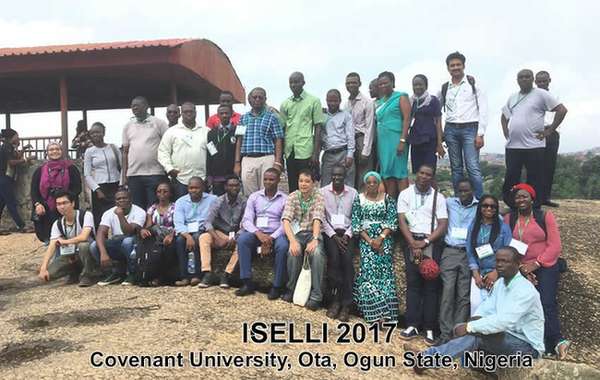
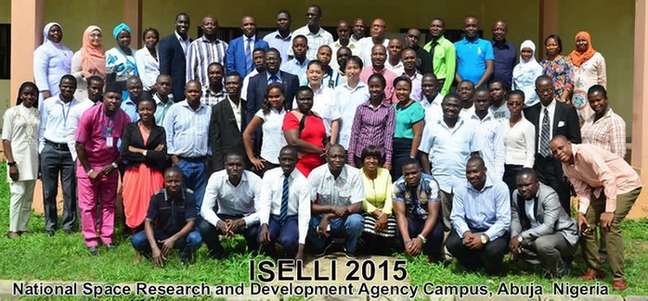
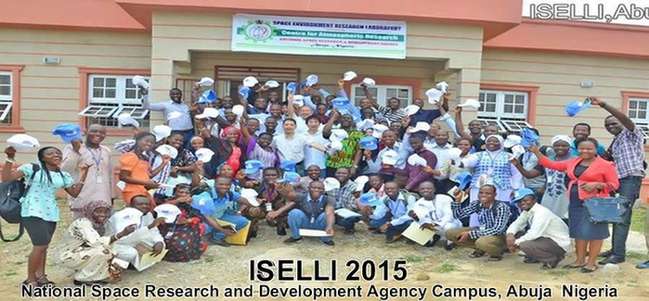
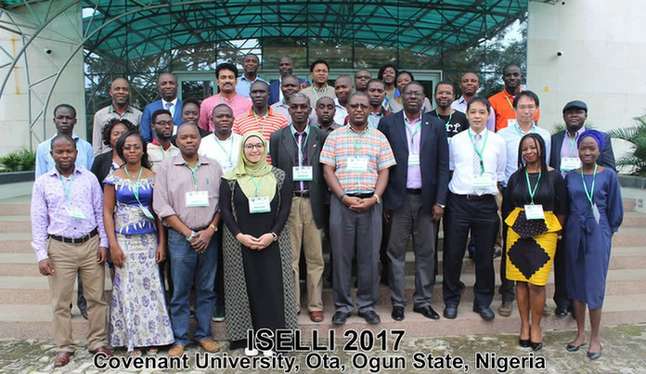
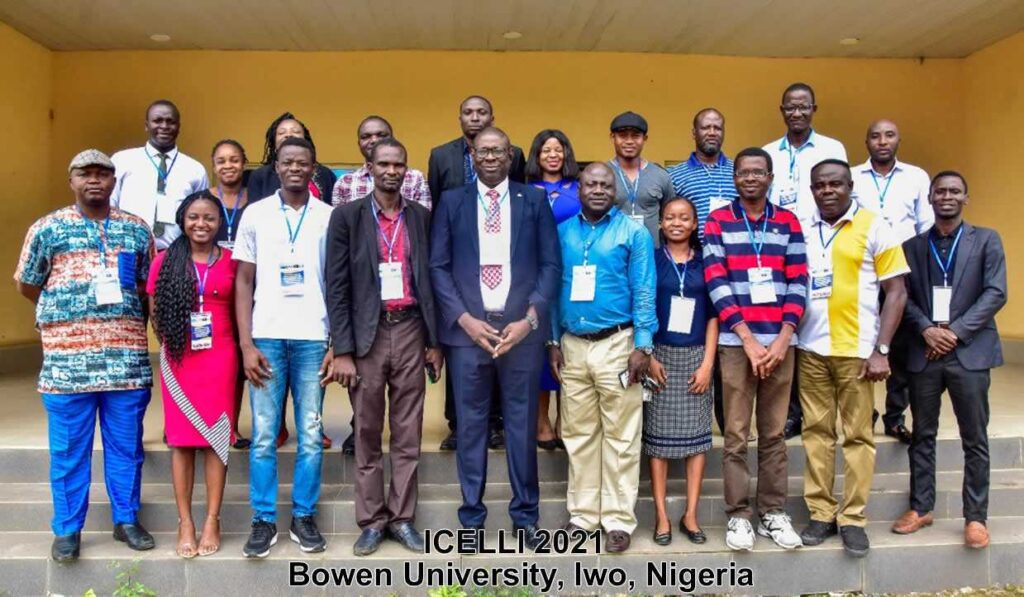
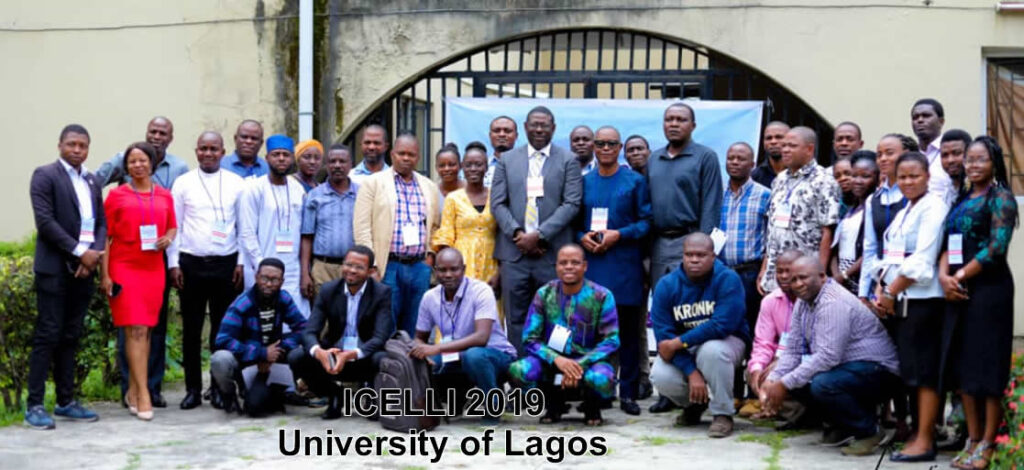
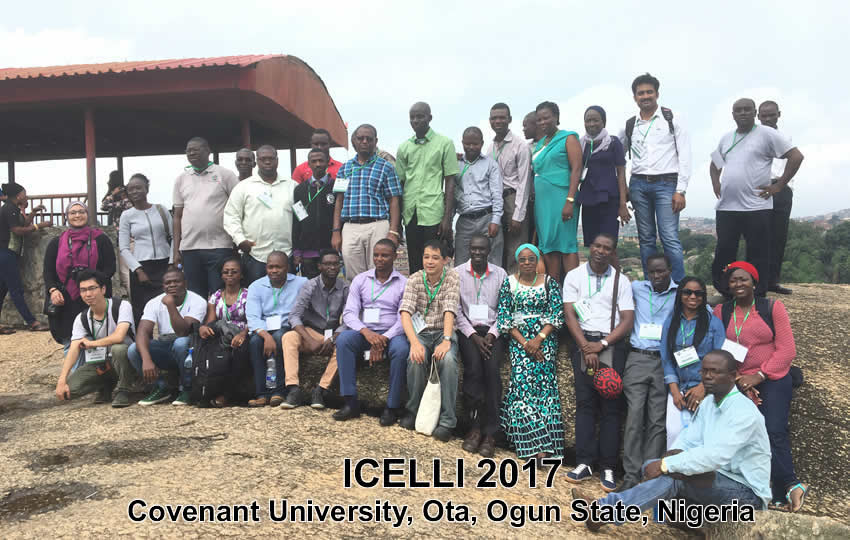
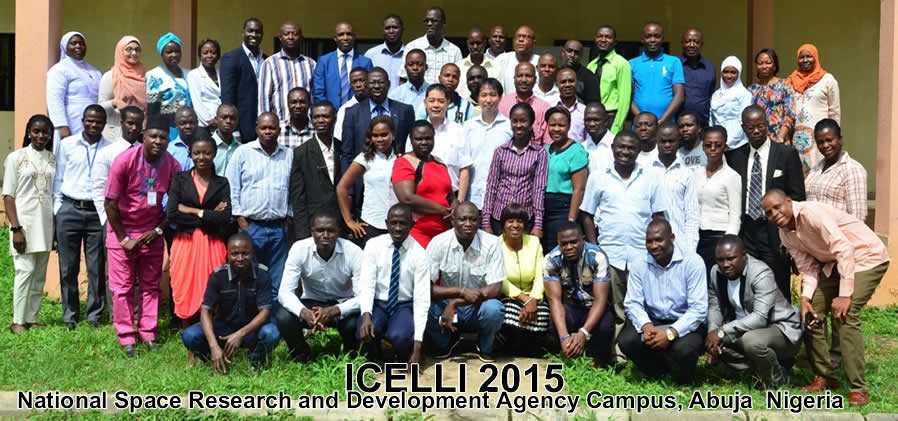
The equatorial region, also known as the low latitude region, refers to the region within ± 20° on either side of the geomagnetic equator. The great effect of the equatorial ionosphere on space-based technologies, due to its associated complexities and dynamics, has made the region a point of international collaborative focus in scientific research
The activity is planned to run for a period of 5 days. The program of the Colloquium includes discussions of the rather wide range of phenomena, such as equatorial ionosphere, equatorial electrojet, equatorial ionospheric anomaly, geomagnetic disturbances, geomagnetically induced currents, solar-terrestrial relations, stratospheric warming, space weather, theory and modelling of ionospheric scintillation and irregularities, utilisation of equatorial orbital plane for satellite technology, presentation of results from different and novel techniques for probing the equatorial ionosphere etc.
This edition shall like the past editions feature a composition of tutorials, seminars, conferences and hands-on training on every aspect of research and techniques bordering on the dynamics of equatorial and low latitude ionosphere as well as space weather.
This year’s edition shall have 2 days dedicated to emerging topics of interest such as applications of Artificial Intelligence AI, Machine Learning, open-source programming languages and non-linear tools towards understanding and predictability of complex space weather processes for effective operational systems.
This Colloquium shall offer opportunities for the presentation of standard contributions (oral and poster), delivery of invited papers by distinguished scientists with the intention of educating young scientists, as well as the exhibition of space-dependent technologies and measurement systems relevant to ionospheric studies. The forum shall serve as an effective meeting point for scientists, policymakers, students and designers of space-dependent technologies. This year’s edition shall also have a hybrid component.
Download some of the papers presented during the 2023 Colloquium
International Advisory Board
International ADVISORY Board
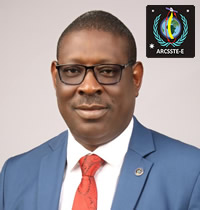
Professor Babatunde Rabiu
UN-African Regional Centre for Space Science and Technology Education in English
(UN-ARCSSTE-E);
National Space Research and Development Agency, Nigeria
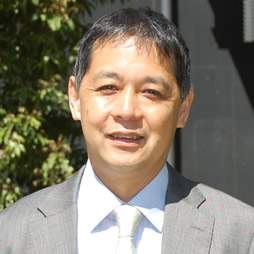
Professor Kazuo Shiokawa
Nagoya University
Japan
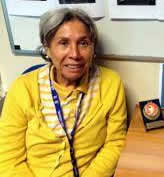
Professor Christine Mazaudier
Sorbonne Universities,
UPMC University,
Laboratoire de Physique des Plasmas,
Paris, France

Dr. Keith Groves
Boston College,
USA
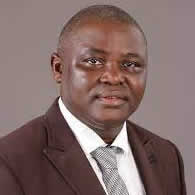
Professor Elijah Oyeyemi
University of Lagos,
Nigeria
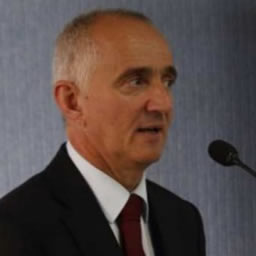
Professor Renato Filjar
University of Applied Sciences Hrvatsko Zagorje Krapina,
Krapina, Croatia
Professor Wojciech J. Miloch
University of Oslo,
Norway

Dr. Nurul Shazana Abdul Hamid
The National University of Malaysia

Dr. Elijah Falayi
Tai Solarin University, Nigeria

Dr. Bruno Nava
Abdus Salam International Centre for theoretical Physics, Italy

Dr. Fujimoto Akiko
Kyushu Institute of Technology,
Japan

Dr. Olawale Bolaji
University of Lagos,
Nigeria
Technical/Logistics Committee
Professor Babatunde Rabiu
Dr. Daniel Okoh
Dr. Samuel Ogunjo
Dr. Bolanle Abdulrahim
Dr. Aderonke Akerele
Ms Funmilayo Shonubi
Technical/Logistics Committee




Co-organized by